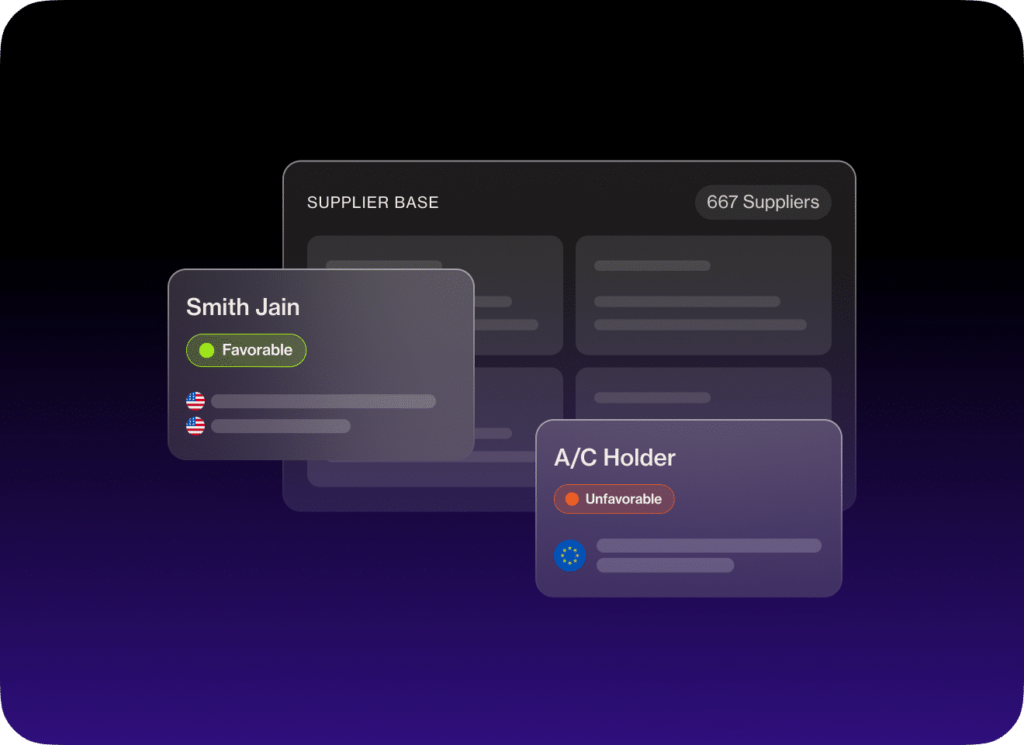
With Trustpair, validate bank accounts in 190 countries and secure every payment through automated verifications. Keep banking operations safe and efficient, at all times.
The fraud in banking industry is evolving. Instant payments, digital channels, and global networks give criminals more opportunities to commit fraud.
Operational Strain
Fraud checks consume time and resources from compliance, treasury, and finance teams. Automating banking fraud detection streamlines operations, reduces costs, and strengthens protection.
Regulatory Pressure
Banks face strict rules around money laundering, suspicious activity reports, and customer due diligence. Outdated processes increase the risk of non-compliance and exposure to financial crime.
Fraud in Banking: A Rising Threat
The banking industry is under constant pressure as instant payments, digital channels, and global transactions multiply. This scale makes financial institutions a prime target for fraudsters.
From digital banking fraud to impersonation schemes, criminals exploit gaps in verification and outdated processes. The result:
Significant fraud losses
Reputational harm and loss of customer trust
Regulatory exposure and fines
In today’s fast-moving financial system, traditional controls can’t keep up with sophisticated fraudulent activities.
Banks need a robust risk management framework designed for the complexity of the financial services industry. With Trustpair, your institution can:
Continuous risk assessment across vendor databases
Real-time alerts on transaction and supplier anomalies
Dashboards identifying key risk indicators
Improved risk governance and collaboration across global teams
Proactively reduce risk before it impacts your clients, your reputation, or the wider financial system.
How Trustpair Helps Financial Institutions
Manual beneficiary bank account validations performed by finance and compliance teams leave banks exposed to errors and fraudulent activities. With Trustpair:
Spot supplier data anomalies and block payments before their execution
Integrate fraud prevention in your existing stack with native integrations (SAP, Oracle, Coupa, etc)
Banking Efficiency Starts With Trust
Trust is the foundation of the banking industry, and accurate payment data underpins that trust. One mistake in beneficiary bank account details can transfer money to the wrong destination, trigger compliance alerts, and damage customer relationships.
Real-time monitoring and fraud detection bring visibility and control over every transaction. When your data is clean and verified, teams operate faster, with confidence, and without the risk of falling victim to fraudulent documents or payment errors.
Protecting payments is about more than security. It is about ensuring business continuity, safeguarding the financial system, and maintaining the reputation of your institution.
The Key Benefits of Using Trustpair
0 successful fraud
at any of our 450+ clients
190 countries
covered by our banking data sources
90%
of vendor evaluations delivered instantly
Your fortress against vendor fraud
Experience Seamless Security in Action. Request Your Demo Today !
Browse through our different sections and find the answer to your question.
What is fraud in the banking sector?
Fraud in the banking sector happens when criminals target the banks or its customers to steal money or misuse bank accounts. It’s a growing challenge for financial institutions across the entire financial services industry.
Common types of bank fraud include:
Account takeover fraud and identity theft, where stolen credentials are used to control online accounts.
Synthetic identity fraud and new account fraud, often built on fake identities.
Payment scams like wire transfer fraud, credit card fraud, check fraud, and mortgage fraud.
With the rise of digital banking, threats such as online banking fraud, mobile banking fraud, and attacks through banking apps are accelerating. Criminals use phishing scams, fraudulent documents, or fake bank statements to gain access to sensitive credit card details and even multiple accounts.
The impact is huge: fraud losses increase every year and drive up the costs for banks.
To fight back, banks rely on:
Strong security measures
Smart fraud detection powered by artificial intelligence and machine learning
Better customer due diligence to prevent bank fraud and protect the financial system
What are the cyber risks in the banking sector?
The banking sector faces constant exposure to cyber risks. Criminals target financial institutions and the wider banking industry to steal money, gain access to sensitive data, and disrupt the financial system.
Common cyber risks in banking include:
Account takeover and identity theft through stolen credentials or fake identities.
Phishing attacks and phishing scams designed to trick customers into sharing credit card details or a person’s personal information.
Fraudulent activities such as using forged or fraudulent documents, fake bank statements, or fake documents to commit account fraud and new account fraud.
Digital banking fraud and online banking fraud across mobile banking, banking apps, and online accounts.
Large-scale wire transfer fraud or manipulation of online payments and the automated clearing house.
Money laundering and other financial crimes, which may involve shell networks or politically exposed persons.
The potential risks are significant: cyberattacks not only cost banks through direct fraud losses, but also erode customer trust and expose weaknesses in verification processes.
To fight these threats, banks must use advanced fraud detection, monitor fraud patterns, and adopt strong security measures. Filing suspicious activity reports, enhancing customer due diligence, and deploying artificial intelligence tools all help prevent fraud and reduce the chance of falling victim to evolving fraud attacks.
What is the biggest threat facing the banking industry today?
The biggest threat facing the banking industry today is fraudulent payments. This form of financial fraud occurs when criminals manipulate account details or carry out fraudulent activities that divert funds into illegitimate bank accounts. Once banks transfer money through a wire transfer or online payments, recovery is almost impossible, leading to heavy fraud losses.
This type of consumer fraud goes beyond individual scams. It exposes financial institutions to systemic criminal activity, damages trust across the financial services industry, and increases the risk of falling victim to ongoing fraud attacks.
To fight back, banks need reliable verification processes and stronger banking fraud detection. By improving controls and monitoring, they can prevent fraud, reduce exposure to present fraud, and protect the global financial system from instability.
What are Digital Banking frauds?
Digital banking fraud is one of the fastest-growing risks in the fraud in banking industry. It covers schemes where criminals use technology to commit fraud, often by targeting customers of financial institutions through online banking, mobile banking, and banking apps.
Examples of digital banking fraud include:
Phishing attacks through emails, texts, or even fraudulent phone calls that steal logins and credit card details.
Account fraud and identity theft where fake identities or fraudulent documents are used to open online accounts.
Manipulation of payments, such as wire transfer scams or fake online payments, that cause banks to transfer money to criminal networks.
These fraudulent activities cause serious fraud losses, expose consumers to consumer fraud, and drive up the overall cost banks must absorb. Regulators like the Federal Trade Commission have highlighted the potential risks, while compliance teams are pressured to report cases in line with each fraud bill and regulation.
To reduce exposure, banks must strengthen banking fraud detection, improve verification processes, and build a strong center fraud response to stop new fraud attacks before customers end up falling victim.
TESTIMONIALS
Voices of trust
Explore how our solutions have empowered businesses like yours to fortify against fraud and build a resilient financial ecosystem.
Malika Benfares
Head of Treasury and Consolidation
"Trustpair gives us more reliability and peace of mind. The financial director is more serene when it comes to approving the transfer order."
Michele Bruno
CFO and Treasurer
"With Trustpair’s verification methodology, it's no longer just a consistency check but an exact confirmation of the validity of the third party: there is no longer any risk."
Joffrey Tabouret
Head of Treasury and Financing
"With Trustpair, we are able to automatically and quickly monitor our third parties and ensure the security of that very data over the long term."
Fabrice Meunier
Administrative and Financial Manager
“I would definitely recommend Trustpair to finance departments. It makes adding and modifying beneficiaries more reliable, without resorting to manual processes that are cumbersome, time-consuming and fallible.”
Fanny Harquel
Accountability Manager
“The control process is simplified with the Trustpair solution, the Finance Department is reassured and, above all, it no longer needs to waste time performing manual checks to verify a supplier's bank details.”
Colin Cesena
Middle Office Treasury Manager
"Trustpair adapts very well to the specifics of our market and our way of working. Several features are developed as we work together. That's a real plus."
Etienne Mechain
Financial Manager
"Trustpair has become more than a reflex; it has become an obligation. The team no longer validates an IBAN unless Trustpair has confirmed it to us."
Mauro Portela
GBS - Managing Director Global MDM Operations
Thanks to Trustpair, we’ve made a significant shift in our security processes and filled the gaps we needed to fill. Trustpair has proved to be a committed and trustful partner and we’ve appreciated the support and transparency.
Monika Razny
Treasury and Corporate Finance Manager
We’ve gone from manual and time-consuming fraud controls to automated bank account validation done directly in SAP. The workload has been drastically reduced and payment security is now guaranteed.
Latest news
Dive into our comprehensive resources to deepen your understanding of vendor payment fraud, cybersecurity, and the transformative power of Trustpair.